Two Scientific Innovators, One Shared Mission
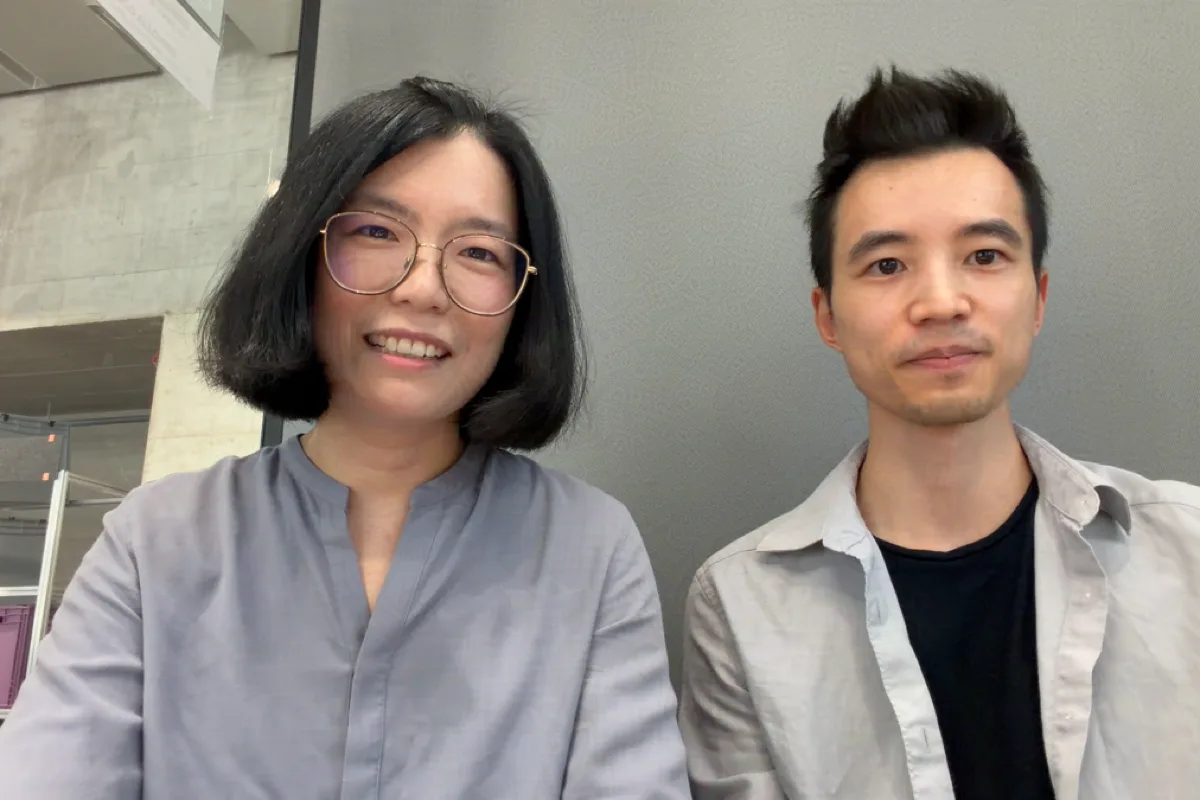
We welcome Dr. Shen Yan to Interlit as co-founder, Chief Scientific Officer (CSO), and business developer. With extensive experience in life sciences and innovation-driven initiatives, and as a PhD with an MBA, Dr. Yan bring a unique combination of scientific rigor and business acumen. She will help drive Interlit’s scientific and commercial strategy, translating cutting-edge protein design into clinically relevant and commercially viable solutions.
Traditional drug development relies heavily on labor-intensive experiments. Today, computational methods have reached a tipping point where in silico predictions have become both clinically relevant and fast.
Interlit has established strong capabilities in protein design and ranking of therapeutic candidates. In a recent EGFR binder optimization competition, all 10 designs we submitted bound to their target. By comparison, the two earlier public rounds on this target reached hit rates of 3.0% and 11.3%.1 Furthermore, 3 of our 10 designs surpassed the previous world record, and the one our method ranked first bound 43.9 times tighter than cetuximab, the approved medicine we started from. All binding affinities were measured by an independent laboratory.2
However, this result answered one question but left others open: binding affinity is only one of several key requirements a molecule must meet before it can become a medicine. Expression, stability, immunogenicity, and behavior in living systems must also be evaluated experimentally and taken into consideration systematically.
The models will keep evolving: the method we developed during the competition was not perfect, but it will keep getting better. What will remain with Interlit is the spirit of our work: our energy to move fast and innovate, our vision to unlock protein design's new frontiers with AI, and our commitment to bring safe medicine faster to patients.
Dr. Shen Yan joined Interlit in July 2026 as co-founder. She completed the Molecular and Translational Biomedicine PhD program at ETH Zürich and received Good Clinical Practice training in a Swiss hospital setting. With more than 15 years of wet-lab experience, she brings expertise in a wide range of biochemical and molecular biology assays, as well as cellular and animal models, which strongly complements our founder and CEO’s computational expertise.
Her scientific background spans a broad range of therapeutic areas, giving her an interdisciplinary perspective that will support Interlit’s strategic positioning. Her experience in drug discovery and development will help Interlit assess the translational potential of its programs and guide their development. She can also contribute to future clinically oriented study design and development, regulatory review, and compliance.
Alongside her scientific expertise, her business acumen spans economics, marketing and pricing, finance, and business strategy. She brings hands-on experience taking data and AI solutions to market through marketing and business development. This enables her to assess whether our science holds up, what it costs to develop, and what value it offers partners.
Like hemoglobin, which achieves its full function when two pairs of subunits come together, Interlit’s core team gains its strength from complementary expertise, each member contributing something essential to a more powerful whole.
AI can do many things, but it cannot replace humans in creating outcomes that are meaningful and clinically safe. That is why we ask the harder questions inside the company before we publish. We are building Interlit for biotech and pharmaceutical teams that need both computational design and biological integrity to hold up. If that is your challenge too, we would like to hear from you.
- Public results for the two earlier rounds on this target, from the ProteinBase collections: round 1 records 6 binders from 202 validated designs, the weakest being vast-eagle-ruby, and round 2 records 45 binders from 400, the weakest being silent-crow-iron. Both counts include only designs with a measured binding affinity. The collections' own summaries report 13 and 54 under a broader binding classification. Retrieved 2026-07-31. ↩
- Affinities measured independently by Adaptyv Biosystems by SPR, two replicates per design, mid-July 2026. The cetuximab scFv we started from binds at 9.94 nM, and our best design measured 0.2263 nM. The full results, including where our ranking was wrong, are in The Score Most People Use to Rank Protein Binders Doesn't Predict Binding. ↩